
Brake Labor Times: A Shop Owner’s Guide to Accurate Estimates

Brakes are one of the most frequently sold services in any auto repair shop, but they’re also one of the easiest jobs to underprice. Whether you’re quoting a customer at the counter, reviewing your flat-rate schedule, or training a new service advisor, having a clear picture of realistic brake labor times can protect your gross profit and keep your customers happy.
This guide breaks down brake labor times by job type, explains the factors that drive time variation, and provides practical guidance for setting and communicating accurate estimates.
Why Brake Labor Times Vary
Unlike an oil change, brake work doesn’t follow a single template. The same “brake job” can take 45 minutes on one vehicle and four hours on the next. Here’s what drives that range:

- Vehicle make and model. Import luxury vehicles, trucks, and high-performance cars often have more complex caliper designs, larger rotors, or integrated parking brake systems that add time.
- Disc vs. drum. Rear drum brake service takes longer than rear disc due to more hardware components, springs, adjusters, and shoes that must be properly installed and adjusted.
- Rust and corrosion. A vehicle from a northern climate with salted roads may take significantly longer. Stuck caliper bolts, seized hardware, and corroded rotors can easily double the book time.
- Additional services. A brake flush, parking brake adjustment, or caliper slide pin service all add time that needs to be captured in your estimate.
- Technician experience. A seasoned tech who does brakes every day will be faster than someone less familiar with the job. Use realistic, shop-average expectations, not your fastest tech’s best time, when building your flat-rate schedule.
Brake Labor Time Reference Chart
The times below reflect standard flat-rate estimates for a typical vehicle in average condition. Add time as appropriate for corrosion, additional services, or complex vehicle designs.
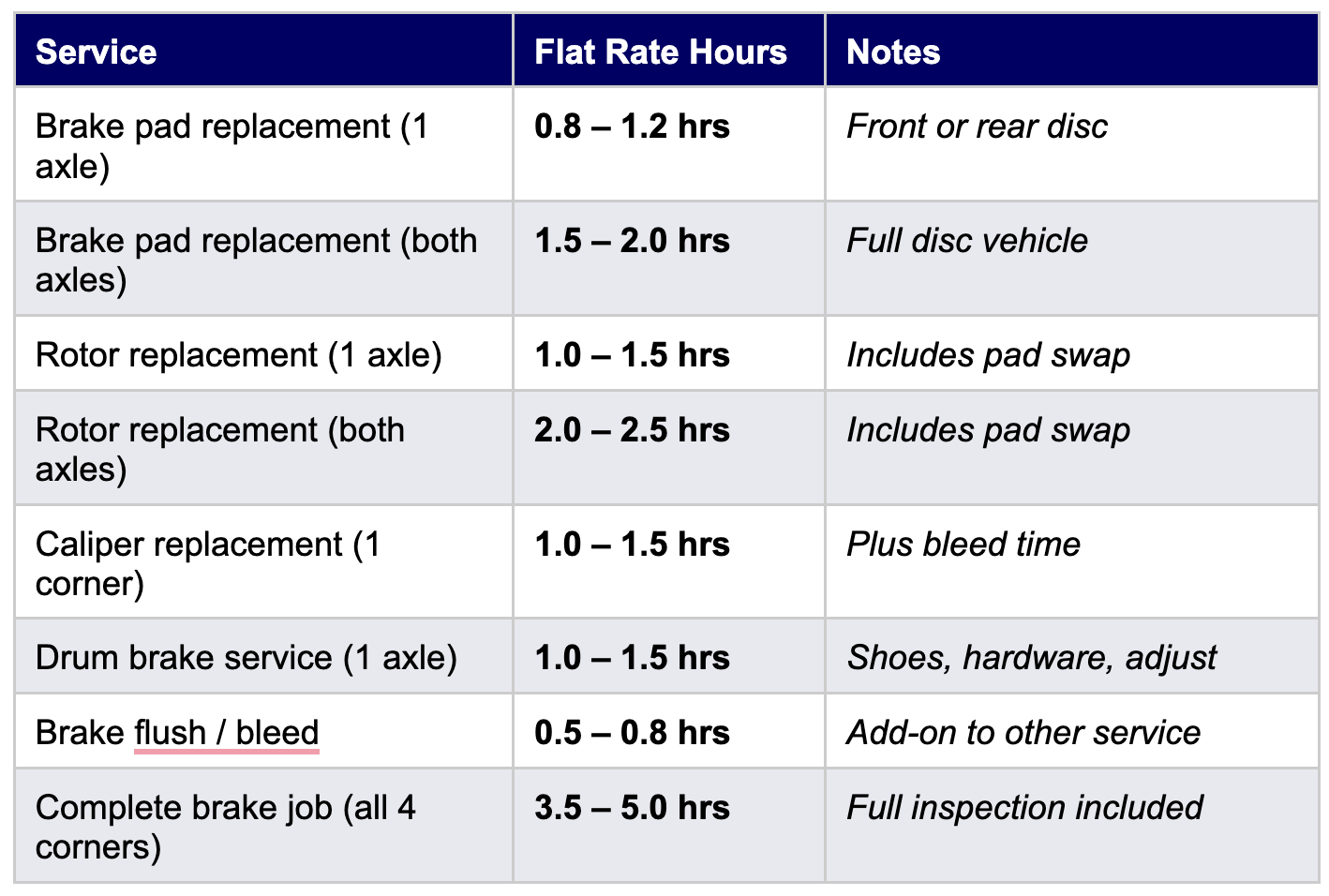
Important: These are estimates based on industry-standard flat rate guides. Always cross-reference against your labor guide (Mitchell, AllData, or similar) for the specific vehicle you’re servicing.
What a “Complete Brake Job” Actually Includes
When a customer asks for a brake job, they may mean anything from a quick pad swap to a full four-corner overhaul. Make sure your service advisors ask the right questions and your technicians perform a thorough inspection before any work begins.
A comprehensive brake inspection and service should cover:
- Brake pad or shoe thickness measurement at all four corners
- Rotor or drum inspection: thickness, runout, scoring, and heat checking
- Caliper inspection: slide freedom, piston function, and seal condition
- Brake hardware: springs, clips, and anti-rattle hardware
- Brake fluid condition and level; recommend flush if contaminated or overdue
- Brake hoses for cracking, swelling, or deterioration
- Parking brake operation and adjustment
- Test drive before and after service
Performing a consistent pre-service inspection not only protects your shop from comebacks, but it also creates natural upsell opportunities when additional items are found. Document everything and walk the customer through the findings before beginning work.
Setting Customer Expectations at the Counter
Brake estimates that exceed the original quote are a leading cause of customer dissatisfaction. Here’s how to reduce that friction:
- Quote a range, not a fixed number. Let customers know the estimate is based on a visual inspection and may change once the wheels are off. This sets appropriate expectations without alarming anyone.
- Explain the inspection step. Most customers don’t realize that a proper brake evaluation takes 15–30 minutes before any parts are ordered. That time has real value, and some shops charge a nominal inspection fee.
- Separate parts from labor in your quotes. Customers who feel the estimate is transparent are more likely to approve additional recommended work.
- Document declined services. If a customer declines a brake flush or caliper replacement, make sure it’s noted on the repair order. This protects you and reinforces the recommendation at the next visit.
Pricing Brakes for Profitability
Brake work is high-frequency, but that doesn’t mean it should be commoditized. When setting your labor rates for brake services, consider:
- Your effective labor rate. Are brake jobs actually generating the gross profit they should? Run a report on brake tickets from the last 90 days and check the effective labor rate against your door rate.
- Parts margin. Premium pads and rotors carry better margins and typically result in fewer comebacks. Offering good/better/best options lets the customer decide while protecting your profitability at every tier.
- Flat rate vs. actual time. If your techs are consistently beating book time on standard brake jobs, you may be leaving money on the table. If they’re consistently over, your labor guide may not match the reality of your car mix.
The Bottom Line
Brake labor is one of the most predictable revenue streams in your shop, but only if your estimates are accurate and your processes are consistent. Use a reliable flat-rate guide, build in time for thorough inspections, and train your service advisors to communicate clearly about what’s included in every estimate.
For more resources on shop operations, pricing strategies, and service advisor training, explore the tools and community available at the Automotive Management Network.
Responses